Shop the influence
Creators don’t just fill feeds. They fill baskets. We examined how often people turn to creators when they’re thinking about buying, what they do next and what ultimately seals the deal.
This chapter explores:
- Which platform inspires, and which one sells?
- What turns attention into a purchase?
- Where do creators matter most in the buying journey?
YouTube inspires, TikTok sells
6 in 10
say they often turn to creators they follow for shopping inspiration.
When it comes to finding ideas, YouTube leads the way. 65% name it as a useful platform for discovering inspiration from creators, ahead of Instagram, TikTok and Facebook.
Below: YouTube owns the inspiration game
But inspiration is only the beginning. Creator content is driving real consumer action. In the last three months, consumers say that creator content has prompted them to:
- search for a product (78%)
- visit a website (78%)
- change their opinion of a product (55%)
- switch from a brand they use to a competitor (38%)
But most importantly, people bought.
say they bought a product in the last three months because of creator content.
Creator influence doesn’t end on the feed. It continues in a search bar, on a brand’s site or in a basket.
And the platform driving the most sales? TikTok.
Below: TikTok has the greatest influence on consumer actions
Content on TikTok is what makes people act. 75% say they bought a product because of creator content, vs 71% on Instagram, 69% on Facebook and 66% on YouTube. TikTok also leads on making people switch brands, (48%).
TikTok comes out on top for every action we ask about, from searching for a product, switching brands, or changing an opinion on a product.
Read together, the data looks less like a race between platforms and more like a relay: one builds the wish list, another helps turn it into a purchase.
YouTube sparks the idea. TikTok closes the deal.
A sign of things to come: platforms are already building for it. TikTok Shop lets creators link products directly in videos, photos and livestreams. And Instagram creators can tag products and add affiliate links to reels, all in an effort to shorten the journey to that final “buy”.
Why does it matter?
For platforms
Know your role in the shopping journey - then make the next step easier. If people come for inspiration, help them explore. If they’re ready to act, shorten the path from creator content to checkout.
For creators
Choose the platform by the role. Inspire where people look for ideas, and ask for the action where they say they act. Your audience is watching and shopping.
For agencies and advertisers
Platforms aren't interchangeable. Plan around the role each one plays in getting people to buy.

Skip the pitch: proof drives the purchase
So what ends up in the basket?
Food and
drinks
39%
Beauty and personal care
37%
Fashion
33%
These are the leading categories in consumer's most recent creator-influenced purchase. But here’s the twist: the most watched categories don't necessarily translate to the most purchased.
Below: Views don’t necessarily equal sales
Travel is one of the top topics people said they watch most (46%), but only 23% say it led to their last purchase. Beauty and fashion run the other way: these categories are watched less, but attention here directly influences purchase behaviour.
In Chapter 1, Worth the Follow, beauty and fashion led on TikTok and Instagram. Those are also the two platforms that have the most influence on what people buy.
So, what turns attention into a purchase?
The most persuasive creator doesn’t sound like an ad. Asked what makes a creator’s suggestion convincing, people say:
- 46% they show evidence, demonstrations or comparisons
- 43% they offer a good price, deal or discount
- 39% they have expertise in the category
Only 16% say it’s because they aspire to the creator’s lifestyle. Similarly to our findings in chapter one, aspiration doesn’t carry much weight: only 24% follow a creator because of it.
Creators don’t sell like models. They sell like teachers.
Claiming that one mascara is better offers an opinion. Testing two side by side and showing the results is proof.
And that’s exactly the kind of format that influences purchases. Asked which type of creator content most influenced their purchase:
say a product appearing naturally in content
say a dedicated review
Consumers don't just want to see a product. They want to know why it's worth buying it.
Commerce is already moving this way. Amazon showcases creator videos on product pages(1), giving shoppers a chance to see products in action while they are deciding what to buy.
Why does it matter?
For platforms
Reward the content that proves, not just the content that pitches: reviews, demos and comparisons.
For creators
Show the product in use. Test, compare and explain products without breaking the flow of the content.
For agencies and advertisers
Brief for evidence and education, not just a sales pitch. Pay for the demo, the review and the comparison.

Creator influence is growing.
And it peaks mid-funnel.
It's becoming clear that creators are more than a trend. They're an integral part of the shopping journey, and their pull is getting stronger.
Below: Creator content is is becoming more influential on consumer purchases.
49% say creators have more influence on what they buy than they did two years ago. In India (72%) and Vietnam (70%), more than 7 in 10 say so.
And it’s not just a young person’s story. Influence is strongest among 25-34s, but it doesn’t stop there.
Of those who say creators influence what they buy more than they did two years ago:.
25-34s
61% say creators influence what they buy more
45-54s
50% say creators influence what they buy more
55-64s
40% say creators influence what they buy more
The growth opportunity is no longer just about reaching younger audiences. Creator influence is spreading into other demographics too.
So where is that influence strongest? Not at the final click
Asked at which stage creators are most useful, when considering a purchase, people say:
- 49% when learning about a product
- 39% when comparing different options
- 39% when discovering new products or brands
- 37% when finding deals or offers
Creators turn curiosity into confidence. Their real strength sits in the middle of the funnel: helping people understand products and compare their options before the final decision.
Imagine buying a pair of headphones. You might not click to buy directly from a creator’s video. But a creator can explain the difference between two models, answer any objections, and, ultimately, put one brand on a consumer’s shortlist. The purchase might happen days later, on a different website. But if you only measure the final click, the creator looks less impactful than they actually were.
Why does it matter?
For platforms
The middle of the funnel is where creators win. Give them better tools to explain and compare, and don’t design only for under-35s.
For creators
Own the middle. Teach, compare, demonstrate. You don’t have to close the sale to win it. And don’t write off older audiences: they say your influence is growing too.
For agencies and advertisers
Don’t judge creators on the last click. Measure what happens before it: understanding, comparison, consideration. And look beyond Gen Zs.

Want to go deeper on the creator economy?
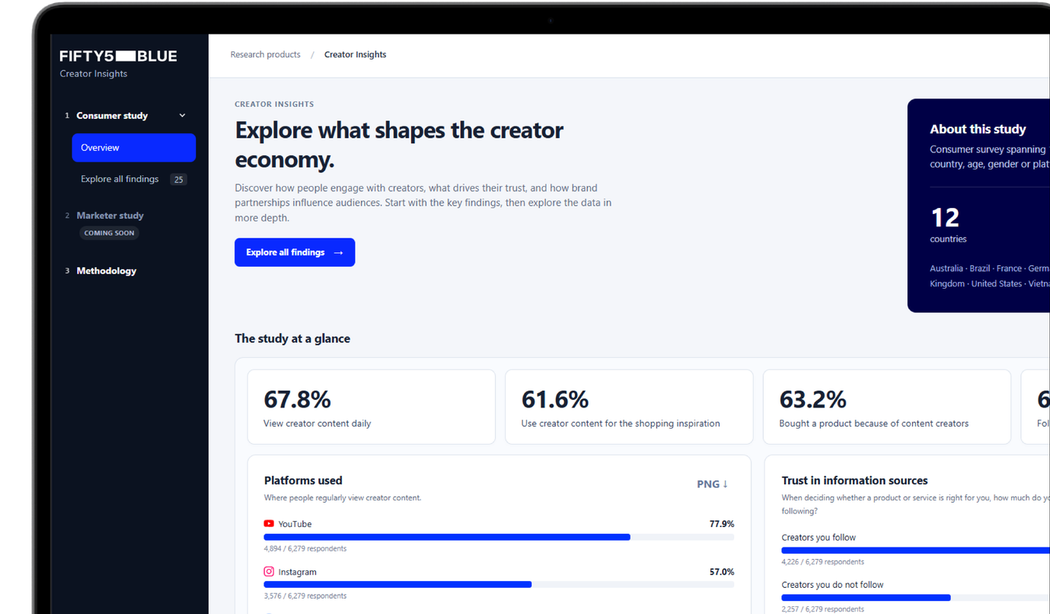
Get access to the creator dashboard and explore the data yourself. Or become a design partner and help shape our next innovation in creator measurement.